
Skilled heating and cooling professionals are in demand nationwide as homes and businesses modernize systems, adopt high‑efficiency heat pumps, and prioritize indoor air quality. For veterans and transitioning service members, GI Bill–approved HVAC programs offer a direct path to a stable, well‑paid career that values discipline, teamwork, and troubleshooting under pressure. With the right training—combining hands‑on labs, real equipment, and career‑ready curriculum—graduates can step into field roles quickly and continue advancing through certifications, licensing, and leadership tracks.
What “GI Bill–Approved” Means for HVAC Training (Eligibility, Funding, and Benefits)
When an HVAC school, apprenticeship, or non‑college certificate program is “approved,” it means the state approving agency and the U.S. Department of Veterans Affairs have verified the program meets standards for quality, duration, and outcomes so GI Bill benefits can be used. For aspiring technicians, that opens doors to non‑degree certificates, diploma programs, and registered apprenticeships that blend classroom instruction with paid on‑the‑job training.
Eligible learners may use Post‑9/11 GI Bill (Chapter 33) benefits for approved HVAC programs to cover tuition and fees, receive a monthly housing allowance based on training mode and rate of pursuit, and a yearly books and supplies stipend. For in‑person instruction above half‑time, the housing allowance is typically calculated using the school’s ZIP code; for online‑only training, a different national calculation applies. Montgomery GI Bill (Chapter 30) and Veteran Readiness and Employment (Chapter 31) can also support HVAC training depending on personal eligibility and career goals. For apprenticeships and on‑the‑job training, the GI Bill provides a monthly benefit while wages increase as skills grow, creating a strong earn‑while‑you‑learn bridge to the trade.
Another advantage is test reimbursement. The VA can reimburse fees for certain approved licensing and certification exams, which matters in HVAC where credentials signal readiness. The foundational EPA Section 608 certification is essential to handle refrigerants legally. Employers also respect credentials like NATE, OSHA 10/30, and manufacturer‑specific training. Having exam costs covered helps keep momentum from classroom to jobsite without financial surprises.
Because HVAC is regulated at both federal and state levels, program approval and licensing pathways can vary by location. A “GI Bill–approved” label ensures tuition can be paid with benefits, but it is equally important that the curriculum supports your state’s licensing requirements and local employer expectations. Strong programs go beyond theory to practice real diagnostics: airflow measurement, static pressure testing, refrigerant recovery and charging, electrical troubleshooting, furnace fundamentals, and heat pump commissioning. These are the tasks you’ll perform day one in the field.
To verify approval, use the VA’s online search tools or contact the school’s School Certifying Official. Ask whether the HVAC track is approved as a non‑college degree certificate, diploma, or apprenticeship; confirm how many clock hours are in‑person; and clarify how the program reports attendance for your housing allowance. Request a written training plan, a list of included tools or safety gear, and details on job placement support. These checks prevent delays in benefit payments and ensure a smooth enrollment.
Finally, timing matters. Many HVAC certificate programs run in accelerated formats—8 to 24 weeks full‑time—or part‑time evening options that fit family schedules. Apprenticeships often span multiple years but include progressive wages, which can be ideal if you want steady income and mentorship while building mastery. The GI Bill can support both paths when they’re properly approved, so you can select the pace that matches your experience and financial goals.
How to Choose the Right HVAC School or Apprenticeship With Your GI Bill
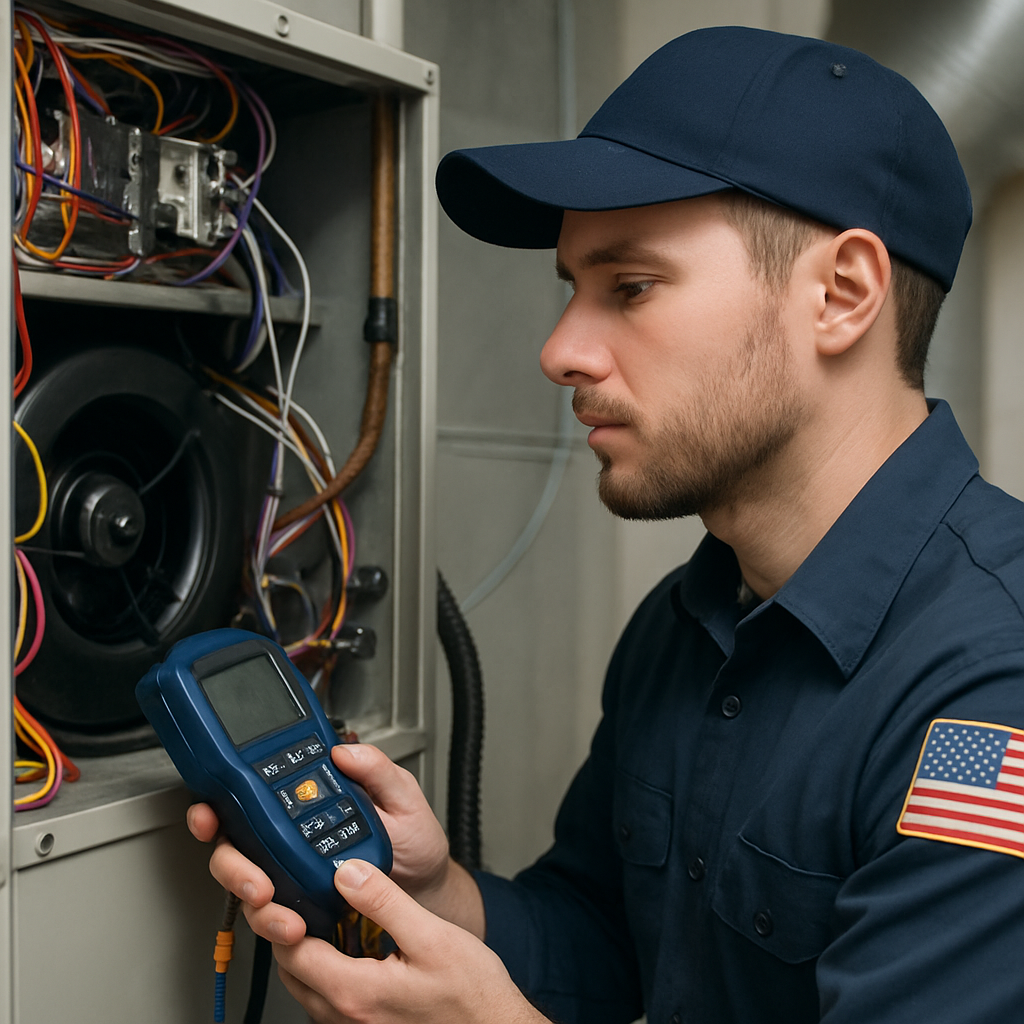
Selecting a program is about more than approval status; it’s about training that translates directly to jobsite performance. Look for hands‑on HVAC training that dedicates significant lab time to real equipment. You should practice airflow diagnostics, zoning design, duct and static pressure testing, refrigerant charging, combustion analysis, and electrical troubleshooting on furnaces, air handlers, condensers, and modern heat pumps. Quality curricula connect the dots between design (Manual J, S, and D), installation, and service so you can find root causes—not just swap parts.
Instructor expertise is critical. Instructors with field time on residential and light commercial systems bring the safety habits, diagnostic logic, and real failure modes you will see in the field. Small class sizes make it easier to master brazing, recovery, commissioning checklists, and digital tools like psychrometers and manometers. Ask how the program assesses competence—skills checklists, live labs, and capstone projects are all signs that you’ll graduate with confidence, not just a certificate.
Consider the program’s credential roadmap. At minimum, it should include preparation and testing for EPA 608. Many employers will also favor graduates who are ready for NATE Core and specialty exams, OSHA safety training, and manufacturer startup certifications, especially for inverter‑driven and cold‑climate heat pumps. Some schools integrate these milestones into tuition; others offer them à la carte. Either way, a clear plan to earn recognized credentials increases your job offers and starting pay.
Schedule and delivery format matter for many military families. If you need to balance employment or childcare, hybrid options that combine focused online theory with concentrated in‑person labs can be ideal—as long as they preserve enough hands‑on time to build muscle memory. Evening and weekend cohorts can widen access without sacrificing depth. Ask exactly how many hours are spent face‑to‑face in the lab and how those hours impact your housing allowance eligibility under the GI Bill.
Finally, evaluate employer connections and placement support. Strong HVAC programs maintain relationships with local contractors, facility teams, and service companies. They invite hiring managers to campus, host tool manufacturer demos, and simulate service calls in the lab so interviews feel natural. Review graduate outcomes, starting roles, and advancement into lead installer, service technician, or commissioning technician positions. Providers of GI Bill approved HVAC programs that emphasize quality installation standards and jobsite readiness are more likely to help you land roles where craftsmanship and customer service are valued.
For those with prior military technical experience—electrical, avionics, refrigeration, engineering—ask about credit for prior learning. Competency‑based assessments can shorten your path while ensuring you still master HVAC‑specific safety and code requirements. Schools familiar with military transcripts and VA paperwork reduce administrative friction so you can focus on learning.
Career Outcomes: From Classroom and Labs to Fieldwork, Licenses, and Long‑Term Growth
Completing a GI Bill–approved HVAC program creates immediate pathways into installation and service roles across residential, light commercial, and specialty segments like data centers or healthcare. Entry‑level installers apply duct layout, airflow balancing, and refrigerant charging skills in the field under the guidance of a lead. Service technicians diagnose comfort complaints, measure static pressure, verify superheat and subcooling, commission heat pumps, and ensure furnaces and air handlers operate safely. With strong fundamentals, it is common to progress from helper to lead within the first year, particularly in shops that prioritize mentoring and structured training.
Licensing and codes vary by state and municipality. Some states require a contractor license to pull permits, while technicians can work under a licensed contractor with the proper registrations. Wherever you land, the EPA 608 certification is non‑negotiable for refrigerant handling. From there, advancing to NATE specialty certifications, building automation coursework, or balancing/commissioning credentials (such as TABB or AABC) opens doors to higher‑complexity work and commercial projects. Many technicians also pursue heat pump specialist training as electrification accelerates and incentive programs expand.
Real‑world examples show how the GI Bill accelerates this journey. A former aircraft maintainer might complete an accelerated HVAC certificate, pass EPA 608, and join a residential contractor as an install technician. Within months, that technician could be leading change‑outs, performing static pressure corrections to eliminate hot and cold spots, and cross‑training with the service department to handle no‑cool calls. Another veteran may prefer a registered apprenticeship, leveraging GI Bill benefits alongside a progressive wage scale, building experience on packaged rooftop units, and preparing for a state journeyman exam once hour requirements are met.
Long‑term, HVAC offers multiple advancement tracks. Technical specialists become go‑to troubleshooters for variable‑speed systems and advanced controls. Quality assurance and commissioning roles ensure new installations meet design intent, airflow targets, and manufacturer specs—preventing callbacks and boosting customer satisfaction. Project managers coordinate multi‑crew installations and mentor newer techs. Many veterans ultimately open their own contracting businesses, applying leadership, logistics, and safety culture learned in service to build respected local brands.
Continuing education keeps momentum strong. Short courses in system design, airflow and zoning, combustion safety, and refrigerant diagnostics help seasoned techs stay sharp as equipment and codes evolve. Online learning modules can reinforce classroom concepts, while advanced labs simulate complex failures to strengthen diagnostic logic. Because the GI Bill can reimburse certain approved exams and licenses, technicians can strategically plan each credential to align with promotions, raises, and new responsibilities.
Geography also shapes opportunity. In hot‑humid regions, dehumidification, ventilation, and IAQ expertise are prized. In cold climates, demand for cold‑climate heat pumps and dual‑fuel systems is rising, along with commissioning skills to ensure comfort at low ambient conditions. In fast‑growing metros, accelerated install crews and retrofit teams are busy year‑round. Wherever you live, a commitment to quality installation—proper load calculations, tight ductwork, verified airflow, and correct charge—sets you apart and builds a reputation that drives referrals and career stability.
Above all, the habits that make military professionals successful—checklists, safety discipline, clear communication, and mission focus—translate directly to HVAC. Pair those strengths with a GI Bill–approved program that emphasizes hands‑on practice, modern heat pump technology, and rigorous diagnostics, and you’ll have a durable skill set the market rewards in any economy.

Sofia cybersecurity lecturer based in Montréal. Viktor decodes ransomware trends, Balkan folklore monsters, and cold-weather cycling hacks. He brews sour cherry beer in his basement and performs slam-poetry in three languages.