
What AI-Generated Landscape Design Is—and Why It Matters Right Now
AI-generated landscape design combines computer vision, machine learning, and visual rendering to transform a simple yard photo into multiple, realistic outdoor concepts. Instead of guessing how a patio, pergola, or planting bed might look, homeowners and design pros can preview options in minutes. The result is a clear, visual language for making confident choices—before a single shovel hits the ground. With landscaping visualization powered by AI, planning becomes faster, selective, and more budget-aware, while creativity expands far beyond what a rough sketch or catalog image can offer.
For homeowners, the value shows up in day-one clarity. Upload a photo, describe goals like “low-maintenance backyard with a grilling area and native plants,” and explore styles such as modern, cottage, or Mediterranean. Each concept feels tangible because it’s mapped onto your actual space—fences, siding, windows, slopes, and sun angles included. That realism makes it easier to align around a shared vision with a spouse, neighbor, HOA, or contractor. It helps prevent costly revisions by catching layout conflicts early and establishing must-haves versus nice-to-haves.
Designers and real estate professionals benefit, too. Rapid iterations allow side-by-side comparisons of materials, layouts, and focal points, which leads to better decision-making and stronger presentations. Agents can generate curb-appeal proposals to show buyers the potential of a property. Contractors can use visuals to clarify scope and sequence, reducing misunderstandings around timelines, materials, and labor. AI-generated concepts become a universal starting point for collaboration—quick to produce, simple to share, and strong enough to inspire agreement.
The technology also supports smarter sustainability. With prompts that prioritize native plants, pollinator-friendly gardens, or xeriscape strategies, concepts can be tailored to regional climates and water restrictions. Whether planning a drought-tolerant front yard in the Southwest, a rain garden in the Pacific Northwest, or snow-resilient hardscaping in colder regions, AI-generated landscape design helps visualize resilient solutions that respect local conditions. The combination of speed, realism, and adaptability makes it an essential planning tool for modern outdoor spaces of any size.
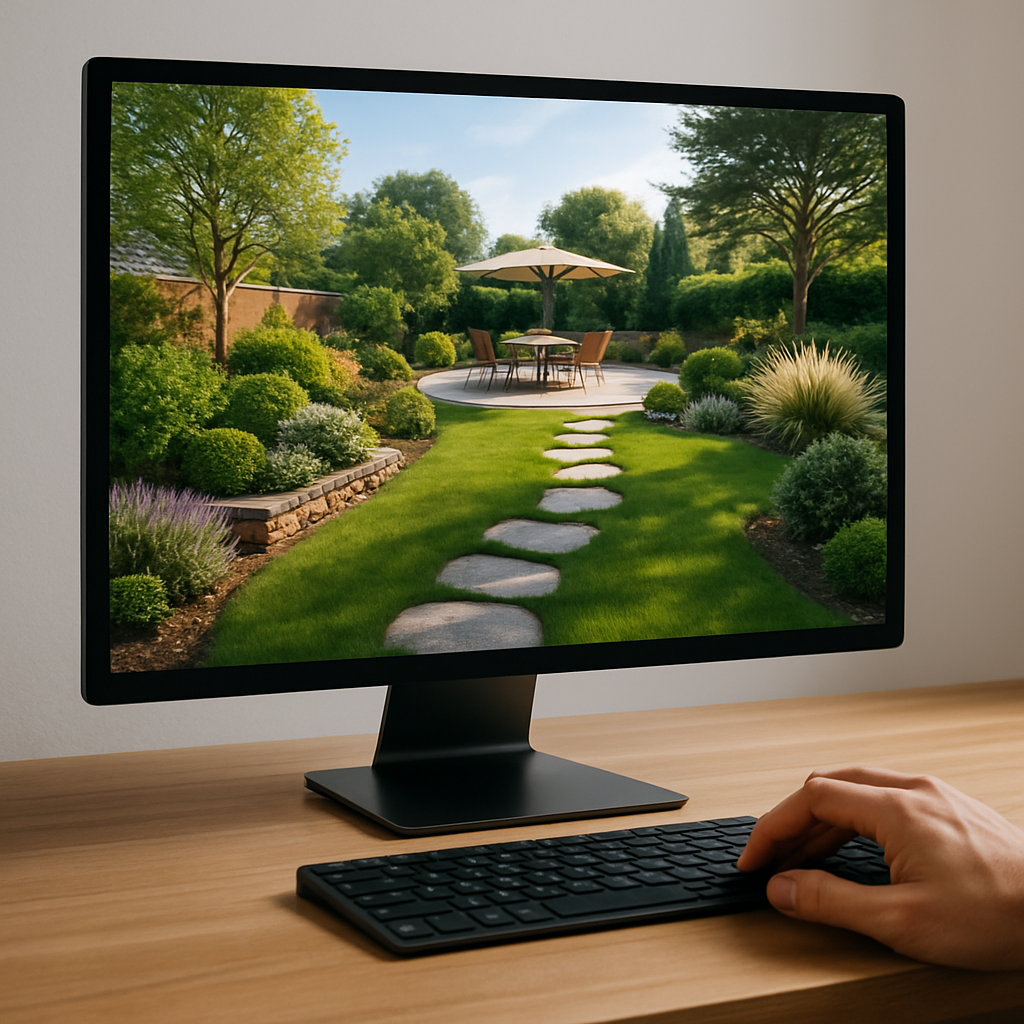
From Photo to Plan: Real Scenarios That Show the Process in Action
The power of AI landscape planning begins with a straightforward workflow. Start by snapping a photo of your front or backyard from a clear vantage point—ideally including the house, property lines, and any slopes or features you plan to keep. Add a short description of your goals, like “expand patio for dining, add shade, improve privacy, and reduce watering.” Select preferred styles or materials—natural stone, composite decking, gravel, stucco planters, board-form concrete—and let the AI generate visual options that look like real, before-and-after previews.
From there, refine and compare. Perhaps Option A features a cedar pergola and geometric pavers; Option B highlights a curved, decomposed granite path with native grasses; Option C expands the lawn but adds a raised vegetable bed and drip irrigation. Toggle through multiple versions to test traffic flow, seating capacity, and sun/shade comfort at dinner time. The process fuels quick iteration, so you can lock in what matters: privacy screens that block a second-story neighbor window, a gate location that works with trash day, or a walkway wide enough for strollers and mobility devices.
Practical, local details come to life within these visuals. In the arid West, a low-water front yard can replace turf with granite mulch, boulders, and climate-smart shrubs—still welcoming, but drought-conscious. In humid regions, AI can preview layered beds with airflow around the foundation to deter mildew and pests. For sloped lots, mockups can show terraced retaining walls, safe steps, and railings that meet common code standards. If your HOA prefers neutral palettes or restricts front-yard fencing, you can test compliant alternatives—hedges, trellises, or decorative screens—before committing.
Consider everyday scenarios. A small urban patio can gain a café table set, string lights, and tall planters that create intimacy without breaking setbacks. A family yard might visualize a grilling station with counter space, storage for cushions, and an adjacent lawn for kids or dogs. Short-term rental owners can preview fast curb-appeal wins—fresh edging, a signature tree, and a statement path—to stand out in listing photos. And if you’re working with a contractor, share one clear, visual brief so labor and materials match expectations from day one. Try starting with a single yard photo and explore your options with ai generated landscape design to compare styles, refine your plan, and move forward with confidence.
Best Practices, Style Ideas, and Pro Tips for Smarter AI-Driven Outdoor Makeovers
The strongest results come from clear prompts and constraints. Specify the spaces you need—dining for six, lounge seating for four, a 36-inch grill zone, a 3-foot primary walkway, a 5-foot turn radius at gates—and your maintenance preference: low, moderate, or high. Call out materials you like and those you don’t. Note privacy goals, pet needs, and any microclimate issues such as afternoon heat or winter shade. The more specific the brief, the more precise the concepts. For planting, include your USDA zone and light conditions so the AI leans toward appropriate, regionally adapted ideas.
Translate style into function. A modern scheme might combine large-format pavers, corten steel planters, and vertical screening bamboo. A cottage look could emphasize curved beds, salvaged brick, and layered perennials. Mediterranean concepts often feature warm stucco, gravel courts, olive tones, and drought-tolerant herbs. For a woodland vibe, think decomposed granite paths under tree canopies, native ferns, and boardwalks over damp zones. AI makes side-by-side style trials fast, so you can settle on the composition that suits your home’s architecture and your daily routines.
Focus on flow and comfort. Ensure primary paths are 36–48 inches wide; secondary garden paths can be narrower but should still allow easy passing. Plan for shade where you linger—pergolas, umbrellas, or vines on trellises. Consider wind, glare, and nighttime use; the AI can visualize layered lighting with downlights for safety, string lights for ambiance, and spotlights for specimen plants. Include sustainable touches: permeable pavers to reduce runoff, rain gardens near downspouts, and mulch to cool the soil. Prompts for native plants and pollinator support often yield designs that look good and perform better with less water and fertilizer.
Mind the practicalities. While AI-generated landscape design is exceptionally useful for visualization and idea filtering, treat the images as concept art rather than final construction documents. Verify slopes, drainage, and utility lines before digging. Confirm code requirements for steps, railings, and setbacks. If a concept places a tree too close to a foundation or shows a wall higher than your local rules allow, adjust accordingly in consultation with a pro. Use the visuals to get accurate estimates: square footage of paving, linear feet of edging, quantities of gravel or mulch, and plant counts by size. A clear visual brief plus measured takeoffs reduces surprises during installation.
Plan in phases when needed. Start with grading and hardscape, then add irrigation and lighting conduits, followed by planting and décor. AI can preview both the “phase one essentials” and the “future add-ons,” keeping the design cohesive over time. Save your favorite iterations and share them with family or stakeholders to gather feedback. With intentional prompts, climate-aware planting palettes, and attention to real-world constraints, AI landscape design becomes a strategic ally—turning inspiration into a buildable roadmap and helping every backyard makeover feel purposeful, beautiful, and uniquely yours.

Sofia cybersecurity lecturer based in Montréal. Viktor decodes ransomware trends, Balkan folklore monsters, and cold-weather cycling hacks. He brews sour cherry beer in his basement and performs slam-poetry in three languages.