
In Central Texas, roofs face a gauntlet of punishing elements—scorching sun, sudden hail, high winds, and seasonal storms. A reliable, locally rooted Cedar Park roof contractor is more than a service provider; it’s a long-term partner in protecting property value, energy efficiency, and peace of mind. From preventive inspections to full replacements, the right team understands neighborhood building codes, HOA expectations, and the local microclimate that affects everything from shingle selection to attic ventilation. Whether it’s a family home in Cedar Park, a retail space in Round Rock, or a light industrial facility in Georgetown, expert guidance ensures roofs are built for resilience, safety, and longevity—without sacrificing curb appeal. With smart material choices such as impact-resistant shingles, energy-efficient metal roofing, and durable membranes for flat roofing, homeowners and facility managers can stay ahead of costly surprises and keep operations running smoothly, even when Texas weather turns fierce.
How to Choose a Cedar Park Roof Contractor with Proven Local Expertise
Selecting a roofing partner starts with more than a price quote—it begins with verifying local experience, insurance, and proven workmanship. An established Cedar Park roof contractor will be fluent in Williamson County permitting, wind-uplift design considerations, and material performance in the Central Texas climate. That means recommending Class 4 impact-rated shingles for hail-prone neighborhoods, cool-coated metal roofing to reflect heat and reduce attic temperatures, and robust underlayments that stand up to extreme UV exposure. It also includes proper attic ventilation to balance temperature and moisture, helping shingles last longer while improving energy efficiency.
Communication and transparency matter. Look for detailed scopes of work, clear project timelines, and photo documentation of hidden areas such as decking and flashing. Reputable teams provide written warranties on materials and workmanship, explain the difference between repair and replacement options, and outline maintenance steps you can take to extend service life. They also maintain clean job sites, protect landscaping, and follow stringent safety protocols for crews and occupants alike.
Responsive service is critical after storms. If high winds dislodge shingles or hail compromises granules, fast triage—like emergency tarping—can prevent interior water damage and mold growth. Technicians trained in forensic leak detection will trace issues to their source, whether it’s corroded flashing, an unsealed penetrant, or a failing seam on a modified bitumen or TPO system. For businesses, minimizing downtime is just as important as the repair itself; flexible scheduling and coordinated staging help keep doors open during roof repair work.
Most importantly, choose a contractor who lives and works where you do. Local crews have real-world data on storm patterns and product performance across Cedar Park, Leander, and Round Rock. They know which valleys collect debris, which ridges catch the strongest gusts, and how to design details that hold up. For a dependable partner, consider the Cedar park roof contractor property owners trust for transparent estimates, quality materials, and dependable schedules.
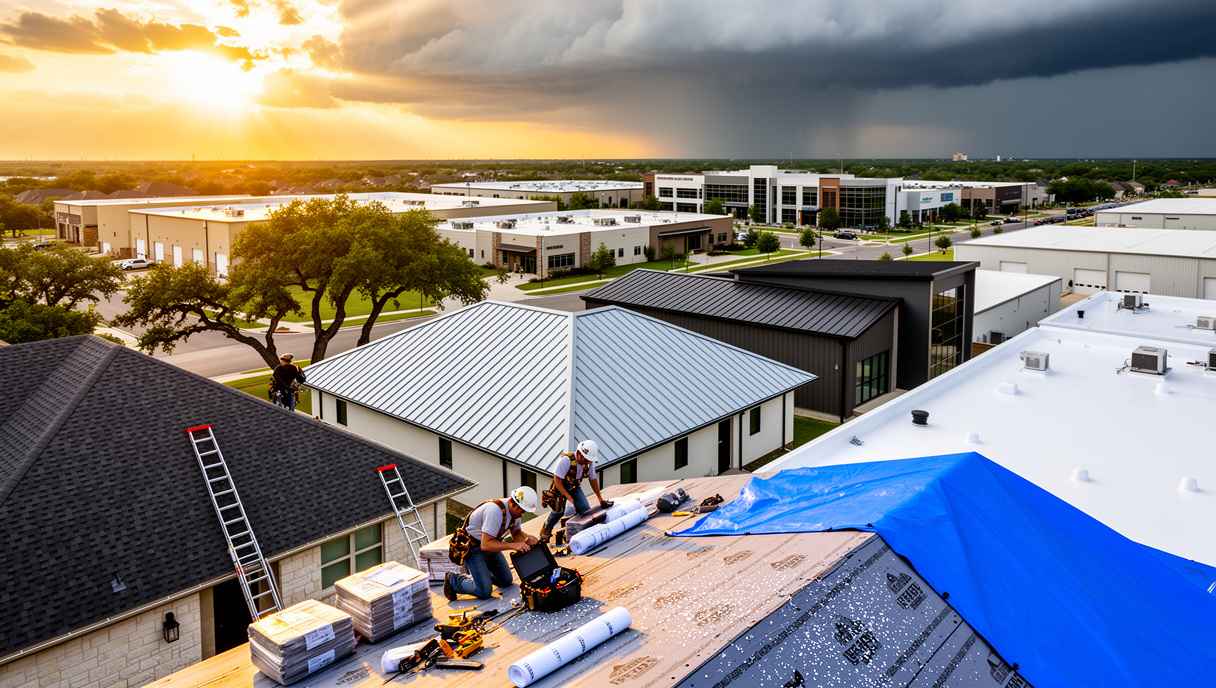
Residential, Commercial, and Flat Roofing Built for Central Texas Weather
Every roof has a job to do—and in Central Texas, that job is strenuous. Residential projects often focus on aesthetics and resilience: architectural asphalt shingles that complement neighborhood styles, standing seam metal roofing for a modern profile and energy savings, or tile systems where weight and structure allow. A thorough contractor will assess decking condition, ventilation, and insulation levels, recommending upgrades that reduce heat gain and help HVAC systems work more efficiently through triple-digit summers.
Commercial and industrial properties rely on flat roofing systems with watertight seams and robust UV defenses. Single-ply membranes like TPO and PVC offer heat-welded seams for long-term durability, while modified bitumen provides a proven solution for smaller buildings or complex penetrations. The best approach depends on traffic patterns, rooftop equipment, drainage design, and budget. Regular inspections catch early warning signs—like ponding water, membrane shrinkage, or seam separation—before they interrupt operations or accelerate wear.
Texas storms demand rapid response. Hail can bruise shingles or dent metal panels, while straight-line winds lift edges and open pathways for leaks. Proactive maintenance plans schedule seasonal checkups to clear debris, secure loose flashing, and reseal vulnerable areas around vents, skylights, and chimneys. For homeowners, that means fewer surprises and more predictable budgeting; for property managers, it means fewer tenant disruptions and a healthier bottom line.
Material selection should align with both design goals and performance needs. Impact-rated shingles help guard against hail, while reflective metal roofing cools attics and reduces cooling costs. On flat roofing, white TPO or PVC membranes combat heat buildup and meet many energy code requirements. Flashing metals, fastener systems, and underlayments must also be chosen carefully—small parts often make the biggest difference during a storm. Across Cedar Park, Leander, Round Rock, and Georgetown, a contractor with a strong local track record will tailor systems to meet code, climate, and long-term value.
Real-World Scenarios from Cedar Park and Nearby Communities
Storm season in Cedar Park can rewrite priorities overnight. After a spring hail event, for example, a single-story home may show only minor granule loss from the street view, yet closer inspection reveals cracked shingles along roof valleys where hail impact is concentrated. A seasoned crew documents each area, checks for soft spots and bruising, and tests for compromised mats. If the damage is localized, a targeted roof repair with matched shingles restores protection quickly. If widespread, a full replacement with impact-rated shingles and upgraded ice-and-water shielding in valleys can harden the roof against future storms.
Commercial properties in Round Rock face different challenges. A retail plaza with a TPO roof may experience seam stress from thermal cycling, or ponding near HVAC curbs after heavy rain. Here, a thermal inspection can identify moisture under the membrane, while core sampling confirms substrate condition. Strategic repairs—such as re-welding seams, re-pitching insulation in problem zones, and installing reinforced walkway pads—extend the service life without disrupting tenants. A maintenance plan with biannual inspections reduces emergency calls and protects warranties.
In Leander, a two-story home with a steep pitch and complex hips might show leaks at a chimney even after previous patch jobs. The root cause could be improperly integrated step flashing or failed counterflashing mortared into the brick. A comprehensive fix replaces flashing assemblies, reseals penetrations, and verifies attic ventilation to reduce heat stress on adjacent shingles. The result is a leak-free system that also lowers attic temperatures—especially when paired with reflective metal roofing accents over bay windows or porches.
Georgetown industrial facilities sometimes contend with expansion and rooftop equipment upgrades. Adding penetrations for new mechanical units requires precise detailing to avoid future leaks. A capable Cedar Park roof contractor coordinates with mechanical teams, fabricates custom curb flashings, and performs flood testing around new installations. By aligning schedules and documenting changes, the roof retains its warranty coverage and operational integrity.
Across Williamson County and the Austin Metro, the pattern is clear: roofs last longer and perform better when inspected regularly, maintained proactively, and built with materials matched to the region. Whether it’s an emergency response after wind damage, a planned re-roof to improve energy performance, or a commercial upgrade to a reinforced flat roofing system, local expertise minimizes risk and maximizes return—season after season.

Sofia cybersecurity lecturer based in Montréal. Viktor decodes ransomware trends, Balkan folklore monsters, and cold-weather cycling hacks. He brews sour cherry beer in his basement and performs slam-poetry in three languages.